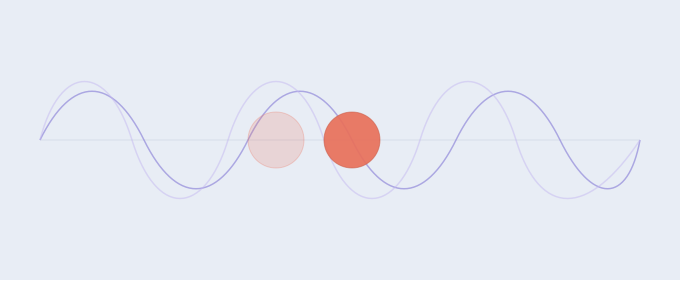
Quantum mechanics is perhaps the most mysterious field of science. You may have heard that particles can exist in two places at once and that the act of observation collapses the wave function, which alters, or even creates, reality. As if the Moon were only there when someone looked at it. This collapse is said to be a source of true randomness; a fundamental roll of the dice.
But is that really how it works?
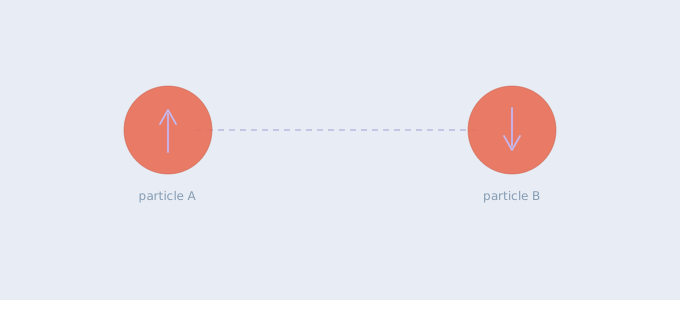
Another icon of quantum mystery is entanglement, which is often described as involving faster-than-light influences. According to Einstein, nothing travels faster than light, yet entangled particles seem to respond to each other instantly, no matter the distance.
Is this just spooky storytelling, or does quantum theory truly defy relativity?

Perhaps the strangest idea of all is the idea of many worlds. It claims that all possible outcomes of a quantum measurement actually happen, in parallel universes.
In this Avengers-style multiverse, Schrödinger’s cat is both dead and alive. And Schrödinger himself? Both mourning and celebrating in different branches of reality.
But what, if anything, does Many-Worlds add to the equations?


.png)
.png)
.png)
.png)